Journal — Notes from the atelier
The quiet
archive.
On lasts, leather and the small decisions that make a pair worth keeping. Written in Bandung, between fittings.
Three notes
CraftBandung4 min read
The last is the shoe.
Before there is leather, there is a shape. A last is carved from wood — or, more often now, milled from a dense block and hand-finished — and every line of the finished shoe is inherited from it. The height of the instep, the width of the toe box, the way the heel counter cups the foot: all of it is decided before a single piece of leather is cut.
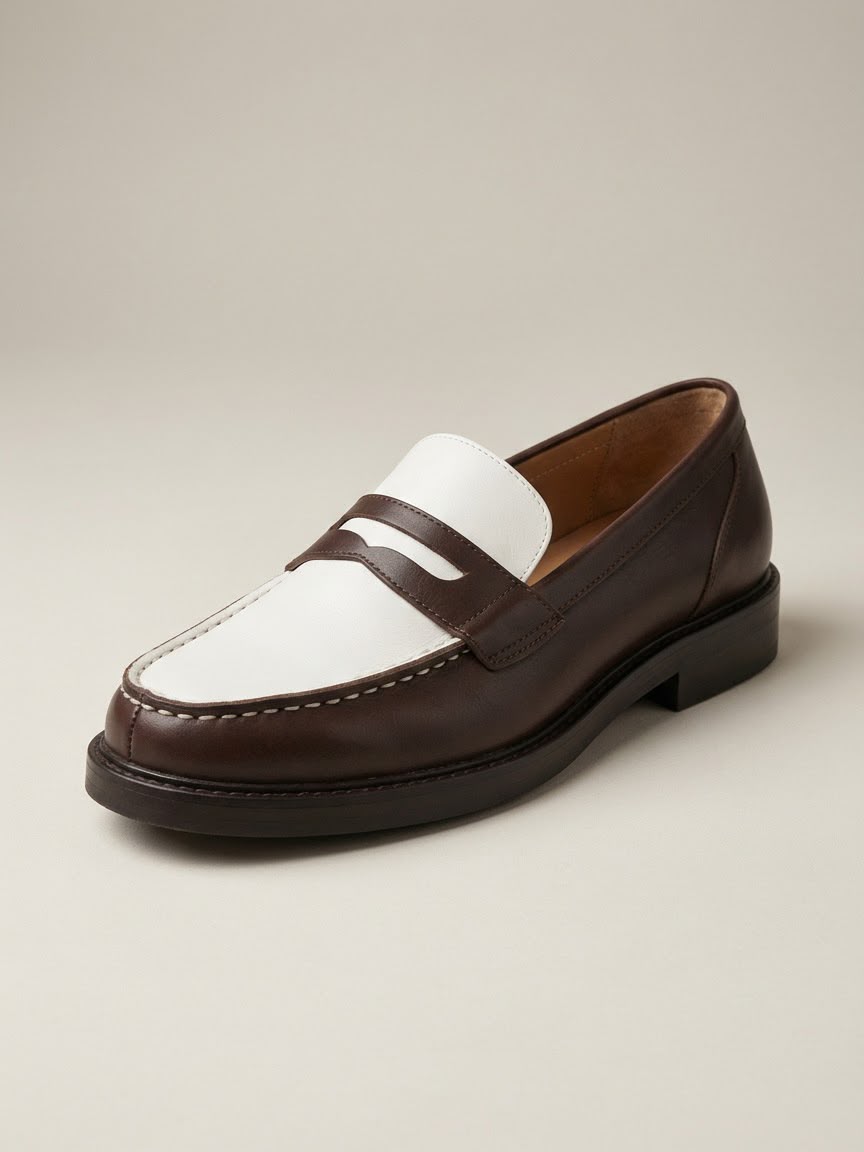
Our loafer sits on a last drawn for a generous toe and a low, settled instep. It is not a sharp, fashion-forward shape. It is the shape of a shoe you can walk in for a whole day, then wear again tomorrow. The apron is stitched by hand with a single needle, which gives the vamp a slight, human curve rather than the dead-flat symmetry of a machine.
“If the last is right, the shoe disappears. If it is wrong, you feel it all day.”
The first sample was too narrow across the ball of the foot. The second lost the line at the toe. The eighth was the one — and even then we changed the heel by a millimetre after wearing it for a month. This is slow, unglamorous work. It is also the only way we know to make a loafer that feels like nothing at all.
Shop the collection →
MaterialFull-grain3 min read
Leather that keeps a record.
Most leather you meet has been corrected: the surface sanded, stamped with a uniform grain, coated to hide what the animal actually looked like. It is consistent, and it stays looking new for a long time. It also never really changes.
We use full-grain calf instead. The grain is left as it grew. You will see small variations between pairs — a faint scar, a change in pore pattern, a slightly darker patch near the heel. These are not faults. They are the reason the leather takes a polish so well and develops a patina instead of simply wearing out.
Keep it clean, keep it dry, and use a neutral cream twice a season. The colour will deepen in the creases and lighten where the shoe flexes. After a year, the pair will look like yours and no one else's. That is not a defect in the product. It is the product.
See the espresso loafer →
CareWearing in2 min read
How to wear them in.
New leather is firm. It needs warmth and movement, not force. Wear the loafers for twenty minutes a day for the first week, ideally indoors, with thin socks. The upper will soften at the vamp and settle around the heel.
Use cedar shoe trees between wears. They hold the shape, pull moisture out of the lining and keep the loafer from curling at the toe. Let the pair rest for a day between long wears; leather recovers faster than it looks.
If the fit is tight across the instep, give it a week before deciding. If it is tight at the toe, do not wait — write to us within 14 days and we will arrange a size exchange. And when the sole eventually wears through, send them back. Blake stitching means the sole can be replaced, and the pair can keep going.
“Buy fewer. Wear them longer. Let them show it.”
Find your pair →